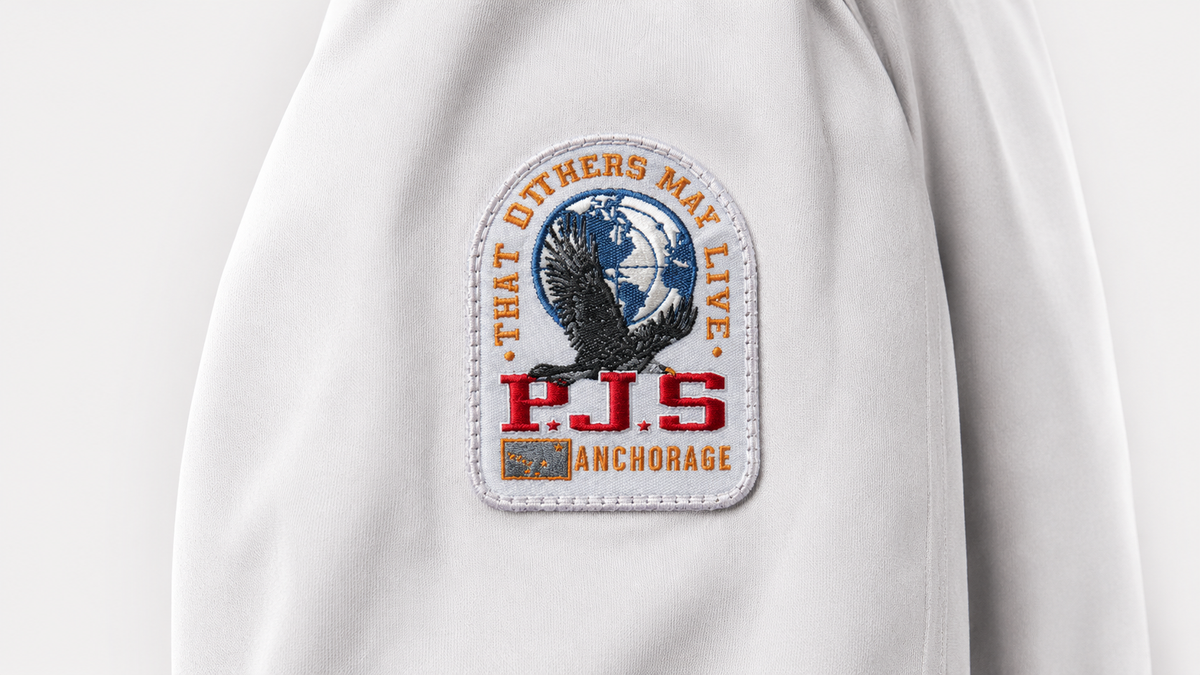
The Parajumpers Logo and Patch: Meaning and Authentication
The patch on the sleeve and the logo are the visual signature of Parajumpers — and also one of the best ways to spot a counterfeit. As a heavily copied brand, Parajumpers has put in place a real arsenal to protect its customers. What do the logo and the PJS patch really mean? And how can you use them to authenticate a piece before you buy? Here is the complete guide.
What does the Parajumpers logo represent?
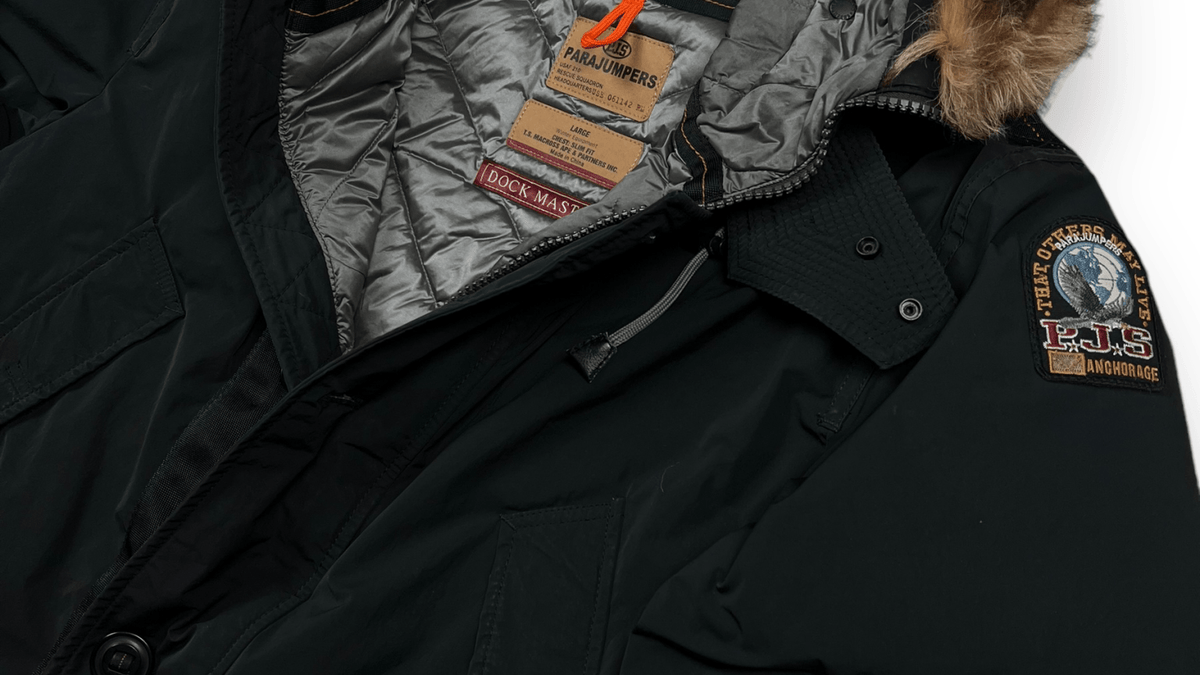
The Parajumpers logo is one of the most detailed in the fashion world — far richer than a simple monogram. It generally consists of a highly elaborate crest, accompanied by the word PARAJUMPERS in a clean sans-serif typeface. This graphic richness is no accident: it refers directly to the military and rescue world that inspired the brand. The name itself, 'Parajumpers', is the nickname of the men of Alaska's 210th Rescue Squadron — the famous PJs (Pararescue Jumpers).
The meaning of the PJS patch

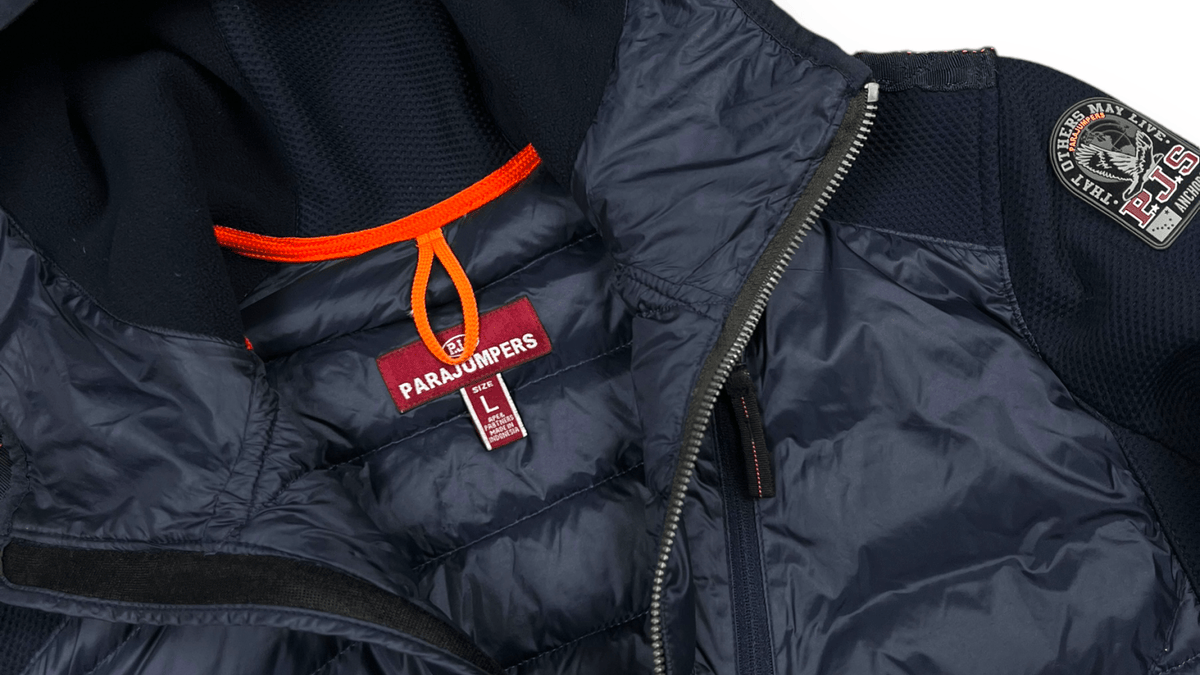
This is the brand's most emblematic element. The patch sewn on the sleeve (usually the left arm) pays tribute to the rescue unit that gave Parajumpers its name. It features the initials PJS and the official motto of the 210th Rescue Squadron: 'That Others May Live'. Far from being a mere ornament, this patch tells the whole story of the brand: a tribute to the American pararescue jumpers. To find out all about this story, see our article dedicated to the history of Parajumpers.
The brand's other signature details
Beyond the patch, Parajumpers can be recognised by several elements inherited from the world of rescue:
- The yellow strap: this yellow tape on the zips and hooks serves as a signal, making it easy to locate your garment in difficult conditions.
- The metal hook: inspired by the quick-release carabiner used by parachutists, it fastens the collar on many models.
- The large cargo pockets and the sturdy hardware, designed for functionality.
Together, these visual markers are the signature of a genuine Parajumpers piece — you will find them on the models presented in our guide to the iconic Parajumpers models.
Authenticating with the Certilogo code (recent pieces)
This is now the most reliable method. Since autumn-winter 2017, every Parajumpers piece has incorporated Certilogo technology: a 12-digit code (known as the CLG code) accompanied by a QR code, printed on an authenticity label sewn inside the garment. To check:
- Scan the QR code with your phone, or enter the 12-digit code on the certilogo.com website.
- The system then confirms whether it is an authentic Parajumpers product, or flags a possible counterfeit.
Key point: the absence of a Certilogo label or a code that does not work are clear signs of a counterfeit on a piece supposed to date from 2017 or later. Our guide to decoding Parajumpers labels and codes details every marking.
What about older pieces?
Before Certilogo was introduced, Parajumpers secured its products with a paper certificate of authenticity featuring an optical security device (a special hologram that is hard to reproduce), together with a card. This label was designed to self-destruct if anyone tried to remove it, guaranteeing that it could not be reused. On an older piece, the complete absence of this certificate should prompt caution — even if, on the pre-owned market, it sometimes happens that a previous owner has lost it. Hence the importance of cross-checking several clues.
Warning signs on the logo and patch
Even without scanning a code, the logo and the patch say a lot. Be wary if you notice:
- Smudged embroidery: on a genuine patch, the PARAJUMPERS lettering is sharp, the outlines precise and the colours clean. Smudging or a dubious shade gives away a fake.
- A badly positioned patch: it should be straight, neither too high on the shoulder nor too low, with even stitching and no loose threads.
- A poor-quality yellow strap: too pale or too bright, badly cut, loosely stitched.
- Zips and pullers without crisp engraving, or a brand label with spelling mistakes.
- A 'plasticky' lining or blotchy fur (genuine ones do not look like this).
The golden rule: never rely on a single detail, but cross-check at least three consistent signs before buying. The full method is in our guide to recognising genuine Parajumpers.
Buying an authenticated Parajumpers piece
The safest way to avoid counterfeits is still to buy from a seller who authenticates every piece. At NB08, every Parajumpers piece is selected and checked by our team according to our authentication process, whether new or pre-owned, with its condition precisely described. Discover our available pieces, such as the Nolan hybrid jacket (2026 Collection) or the Jayden hybrid jacket (2026 Collection), and browse our full Parajumpers collection, every piece authenticated.
In summary
The Parajumpers logo and patch are not mere ornaments: they tell the brand's story while serving as a genuine authentication tool. To buy with peace of mind, check the Certilogo code on recent pieces, examine the quality of the embroidery on the patch and of the yellow strap, and always cross-check several clues. And to avoid any risk, favour a seller who checks the authenticity of their pieces.