Recognising Genuine Parajumpers: An Authentication Guide
Parajumpers is one of the most copied brands in the high-end outerwear market. Before you buy, especially pre-owned, it is essential to know how to recognise genuine Parajumpers. The good news: between the official verification system and a series of concrete clues, authentication is well within your reach. Here is the complete guide, point by point.
The golden rule: cross-check several clues
First and foremost, remember this principle: no single detail is enough to guarantee authenticity. Counterfeiters are getting better and know how to imitate any one element taken in isolation. The right method is to check several consistent points: the verification code, the materials, the seams, the hardware, the labels and the fur. If a single element seems off, caution is called for; if several seem off, walk away.
Checking the Certilogo code: the most reliable proof

This is the most decisive check on recent pieces. Since autumn-winter 2017, every Parajumpers piece has carried a Certilogo label with a 12-digit code and a QR code, to be scanned or entered on the official Certilogo website to confirm authenticity. The absence of this label, or an invalid code, is a clear sign of a counterfeit on a recent piece. The PJS shoulder patch is the other major visual marker. For the detailed procedure and how to read the patch, see our dedicated guide to the Parajumpers logo and patch, as well as our guide to decoding the labels and codes.
Examining the down and the shell
The quality of the materials is an excellent giveaway. Genuine Parajumpers can be recognised by:
- Lofty, lightweight down: the filling (down and feathers) is of high quality, warm without being heavy. Stiff, flat or abnormally heavy padding is suspect.
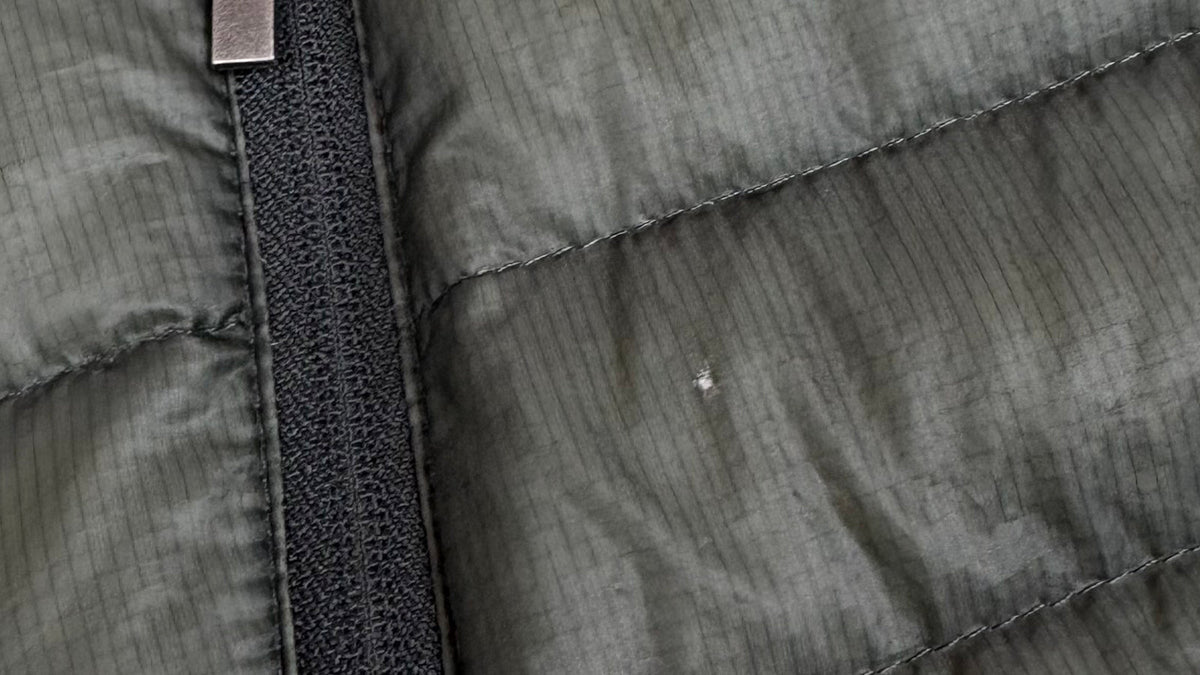
- A technical nylon shell: the outer fabric is dense, slightly structured and treated to be water-repellent. A fabric that is too thin, too shiny or 'plasticky' often gives away an imitation.
- Taped seams on technical models, the sign of genuine high-end construction.
Checking the seams and finishing

The standard of finishing on genuine Parajumpers is impeccable. Check that the seams are even, straight and tight, with no loose threads or crooked stitches. The topstitching should be crisp, the joins symmetrical and the reinforcements (on the elbows of some models, for example) perfectly integrated. Slapdash finishing, loose threads or irregular seams are major warning signs.
Inspecting the hardware

The metal details say a great deal about authenticity:
- The zips: they are high quality and smooth-running, often engraved with the supplier's name (YKK, for example). A zip that snags or has no engraving at all is dubious.
- The signature metal hook (PJS snap hook) at the collar: it should be sturdy, well finished and work perfectly.
- The yellow strap: a bold, true yellow, tightly woven and cleanly cut.
Reading the labels

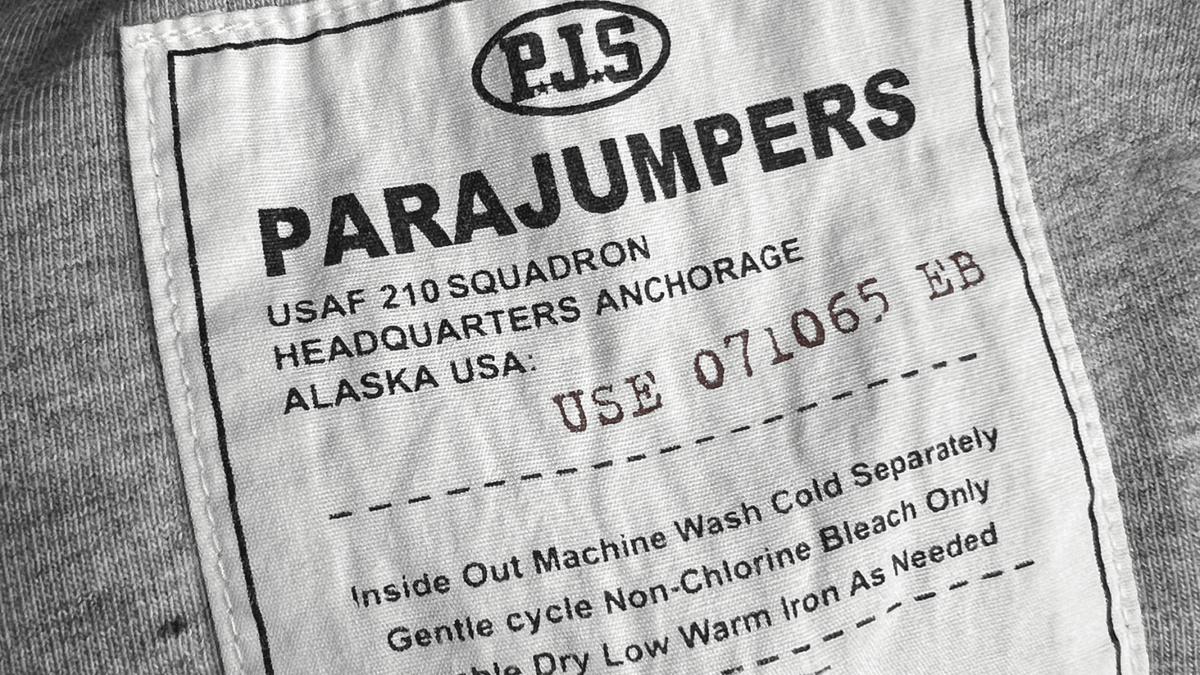
The inside labels are a mine of information. On genuine Parajumpers, the composition label states the materials precisely (for example 90% down / 10% feathers for the filling), and the care labels are clear and consistent. Be wary of spelling mistakes, approximate fonts, badly sewn labels or inconsistent information: these are typical counterfeit errors.
Checking the fur
Many Parajumpers models feature real fur (coyote) trimming the hood, usually removable. Real fur has a natural feel, hairs of varying lengths and an irregular distribution; fake fur often looks too uniform, too 'blotchy' or feels synthetic to the touch. On versions with synthetic fur, the fur is still of good quality and securely attached. Poor-quality, badly sewn fur is a sign of a counterfeit. How to care for it is explained in our guide to caring for Parajumpers.
Being wary of the price and the seller
Beyond the product itself, the context of the sale matters enormously. An abnormally low price compared with the market is the first warning sign: genuine Parajumpers, even pre-owned, retains a certain value — see our article on Parajumpers market value and resale. Also be wary of sellers who cannot provide detailed photos (labels, patch, Certilogo code, seams) or who are evasive about provenance. On peer-to-peer platforms, the risk is at its highest: it is up to you to check everything. To buy pre-owned in complete safety, also follow the advice in our guide Pre-owned Parajumpers: Why and How to Buy.
The safe option: buying from a seller who authenticates
The simplest way to avoid any unpleasant surprises is still to buy from a professional who authenticates every piece. At NB08, every Parajumpers piece is selected and checked by our team according to our authentication process, new and pre-owned alike, with its condition precisely described. You can buy with peace of mind, with no risk of counterfeits. Discover our available pieces, such as the Nolan hybrid jacket or the Jayden hybrid jacket, and browse our Parajumpers collection, every piece authenticated.
In summary
To recognise genuine Parajumpers, always cross-check several clues: verify the Certilogo code, examine the quality of the down and the shell, check the seams and the hardware, read the labels and inspect the fur. Add to that a critical eye on the price and the seller, and you will avoid the vast majority of counterfeits. And to buy with no risk at all, choose a seller who checks the authenticity of their pieces.